
How to Feel Less Lonely in 10 Minutes a Day with Ann Shoket
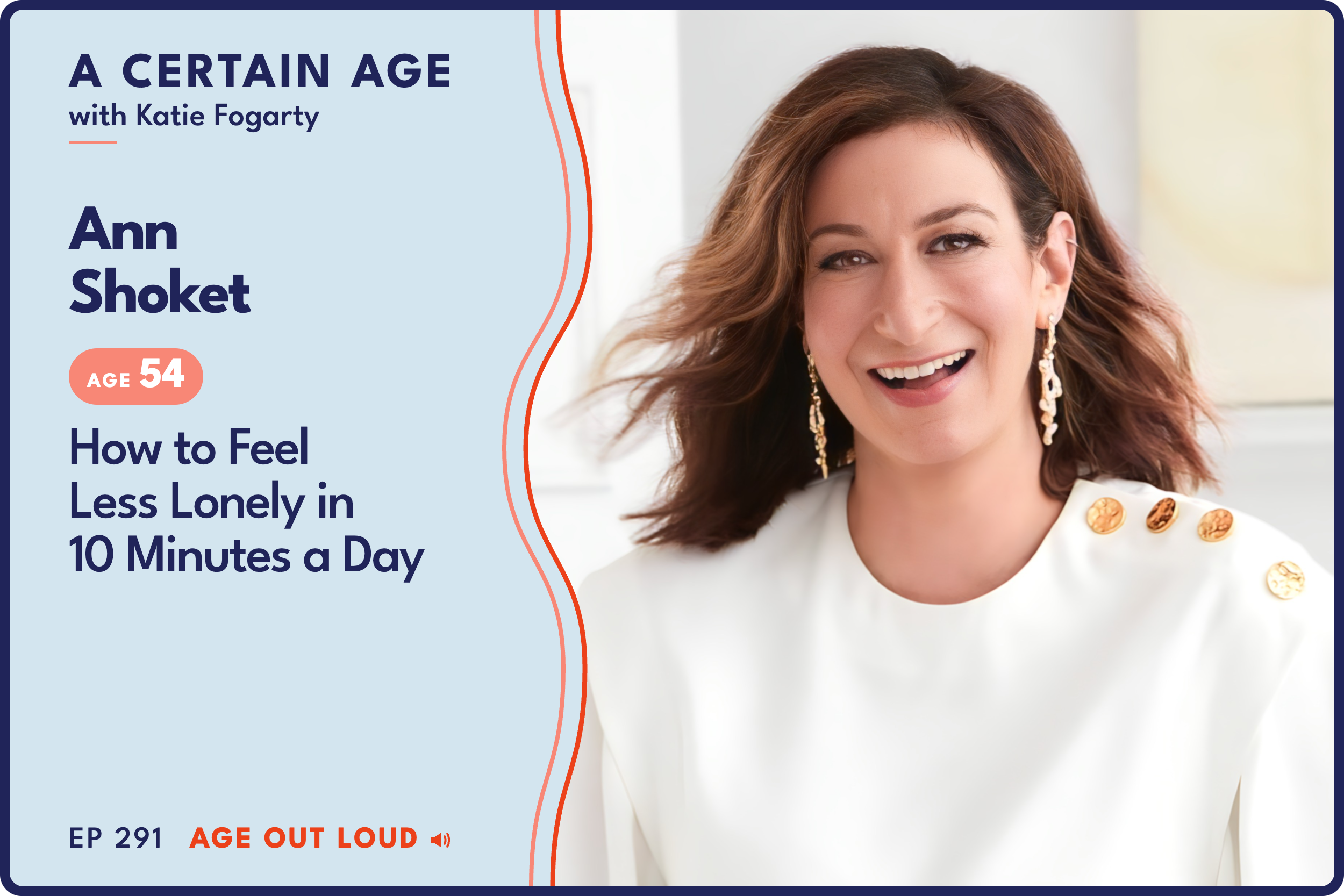
Show Snapshot:
Nearly 80% of women say they feel lonely because of their job, and it tends to get worse, not better, the more senior they become. Ann Shoket, former Editor-in-Chief of Seventeen, author of The Big Life, and CEO of The Li.st, has built a genuinely simple fix: her 10 Minutes to Togetherness Toolkit, backed by real research showing that small, intentional daily connection can measurably cut loneliness, stress, and depression.
In this episode:
Why loneliness feels like a "scarlet letter" nobody wants to admit to
The "micro-habits of connection" that take 10 minutes a day and actually work
Ann's "sprint of yes," a Shonda Rhimes–inspired reset for a stalled social life
Why no AI chatbot will ever replace the real sizzle of dinner with your girlfriends
About Ann Shoket: Ann Shoket is the founder of New Power Media and CEO of TheLi.st, a private community connecting accomplished women across industries to collaborate and expand their opportunities. She's the author of “The Big Life: Embrace the Mess, Work Your Side Hustle, Find a Monumental Relationship, and Become the Badass Babe You Were Meant to Be,” and the former editor-in-chief of Seventeen magazine.
Show Links:
Follow Ann:
Follow TheLi.st:
Learn more about 10 Minutes to Togetherness
Quotable:
“If you admit to being lonely, it feels like the Scarlet Letter in some way.”
Transcript:
Katie Fogarty 00:03
Welcome to A Certain Age, a show for women who are unafraid to age out loud. I'm your host, Katie Fogarty.
Beauties, there's a moment a lot of us hit in midlife — you look up from the busyness of your day-to-day and realize your people have scattered. Kids grow up and out, friendships drift, careers shift, and suddenly the room feels a lot quieter than it used to.
Here's the thing: loneliness is a public health epidemic, reportedly worse for your health than smoking. And here's a stat that will shock you — nearly 80% of professional women say they feel lonely at work, and it gets worse, not better, the more senior we get.
My guest today has spent her career studying what makes women thrive. She ran Seventeen magazine, wrote the book The Big Life, and now leads The List — one of the most connected networking communities for women in the country. Her name is Ann Shoket, and her newest project might be the simplest, most useful fix I've heard to combat loneliness: the 10 Minutes to Togetherness Toolkit.
And here's the promise — and Ann backs it with real research — 10 intentional minutes a day: one text, one voice memo, one "you've been on my mind," can measurably cut loneliness, stress, and depression, and boost connection and happiness.
We're going to get into her own morning ritual for staying connected, her "sprint of yes" — a short burst of saying yes to everything when you're feeling stuck or disconnected — and why she's convinced 20 minutes chatting with an AI bot will never give you the sizzle of a real dinner with your girlfriends. I agree. I love this conversation. I'm so excited. Welcome to A Certain Age.
Ann Shoket 00:03
Hello! I'm excited to be here. Thank you.
Katie Fogarty 00:03
I'm excited as well. This is one of my favorite topics — I love connecting. I love the community that podcasting has given me. I feel like I have wonderful mentors in my life, female friendships, but we're always looking to add more people to our lives to have richer relationships. And I know for many women in midlife, they look up from the business of life and realize their people have scattered — right, kids grow, friendships drift, careers shift. As a starting point, I want to know: why don't we talk about this more honestly, and why does it seem to blindside so many women?
Ann Shoket 02:24
Well, we don't talk about it because it feels like there's something wrong with you if you say that you're lonely — like people don't like you, nobody wants to hang out with me, right? If you admit to being lonely, it feels like a scarlet letter in some way. But when we talk about togetherness, I don't mean more followers or more people that you can wave hello to. I mean deep and meaningful connections with human beings that make you feel seen and supported and successful. And we've lost the muscles, right? Our muscles have atrophied because of the pandemic, because of technology — all of that has really softened our ability to make meaningful connections. And it's not hard, but you have to be intentional about it. Otherwise, we'd spend our day just hearting people's pictures on Instagram and answering our friends with one-word texts and never really getting to a deeper relationship, a deeper connection.
Katie Fogarty 03:32
Yeah, the scarlet letter is such a visual image — it's like the big L for loneliness. And if someone's feeling that, they have a lot of company, because I was really surprised by some of the data on your website: 53% of women feel lonely because of their jobs, and this loneliness gets worse as they climb. Most of the women listening to this show are firmly in midlife — they're at the peak of their careers or the peak of their personal lives, whether that's creative work, volunteering, or wherever they are in life. For women in midlife who are facing career reimagining, empty nesting, or reinventing their sense of purpose at this stage of life — why does this compound the loneliness, and what do you feel it costs women when they don't address it?
Ann Shoket 04:24
This is amazing that you're so deep in the research. That 53% number is for senior-level women. If we look at it more broadly, 80% of women — from early career through senior level — say they feel lonely because of their job. If "loneliness" isn't a word you like, here's what we found people actually describe: they feel isolated, they feel overwhelmed, they feel unsupported. If that sounds familiar to you, you're part of that 80% of women who feel lonely because of their jobs.
And that loneliness at work — because we invest so much in our jobs and our careers — spills over into the rest of our lives. Women told us it created greater isolation with their partners; they couldn't talk to their partners about what was happening at work because they wouldn't understand. We had women say they couldn't talk to their families because maybe they were the first or most successful woman in their family, and for them to complain about feeling lonely because of their job felt like a privilege that previous generations didn't have — and wouldn't understand.
Because I'm so invested in women's success in the workplace, I'll add: this is also creating a real pipeline problem. More than 50% of women in early and mid-career had turned down a promotion, quit a job, or stopped working altogether because of the impact on their personal lives.
There's one more piece I really want to say: loneliness is not just a women's problem — it's everyone's problem. Men are deeply lonely too. Equal numbers of men and women say they're lonely in the workplace. For men, though, it tends to feel like a lack of respect — both from the people they report to and the people who report to them. For women, it's this overwhelm, isolation, and lack of support — and that's what I'm focused on: helping women build the muscles they need to build connection. Ten minutes a day — that's my favorite part, because you don't even have to put on shoes.
Katie Fogarty 06:46
I'm down for anything where you can be barefoot.
Ann Shoket 06:49
I need that. After a whole career in fashion, beauty, and magazines, I never want to see my Louboutins again. I don't want to put on Spanx, I don't want to put on lipstick — but I do want to know that there are people who have my back. So it's these tiny — we call them micro-habits of connection — tiny little outreach.
Katie Fogarty 07:11
I love that — we're going to dive into all these tiny little moments and give listeners tools they can use for that sense of isolation or overwhelm, or when they feel like they can't reach out to other people and share what's going on in their lives — in just a minute. But I want to do a little more stage-setting first. You've worked in big magazines, you've been an editor-in-chief, you've retired those heels — good for you, we're all in our Birkenstock era now — but I'm curious: you've had all these different chapters, you've taken over The List, this marvelous, robust women's networking community, and you've built this toolkit. Every chapter feels a little different, but when you look back on this evolution, do you see a theme that brought you here? What was the moment that let you take all these disparate threads and click them into place around loneliness?
Ann Shoket 08:03
I love that question, thank you. The connective tissue between each stage of my career has been about helping women step into their power. It started at Seventeen magazine, where an entire generation of millennial women grew up alongside me, and we were able to talk about that really sticky moment in your life where you're catching the first glimpses of the woman you want to be.
The Big Life followed that generation into the next phase of life, as they were redefining what it meant to be successful — in work, in life, in love — on their own terms. The community of millennial women I built around that book, and learned so much from around my dining room table — I wrote that book around a series of what I called the Badass Babes Dinners at my dining room table — led me to The List. I'd been a member for five years, and I acquired the business in the middle of the pandemic, when we were all desperately in need of each other.
But the question I asked shortly after I acquired the business, as I was really thinking about how to shepherd this community into its next evolution, was: why are we here? This is a community of the most high-impact women — I say they're the people at the top of your news feed — the most high-impact leaders. So why are they coming together to share tips and tricks about work, technology, fashion, where to travel? It's the intersection of the personal and the professional. And I realized that underlying all of this togetherness was a real loneliness — that the world isn't built for high-impact women to achieve and succeed, and they needed to be in a community of people who saw the world the way they did, who'd worked through some of the same issues, and could help each other navigate.
That's when it occurred to me: here's this incredibly well-connected, well-resourced group of human beings who are lonely and coming together in community. What does that mean for everyone else? That's what led me to the togetherness research — what's the problem we're facing with the loneliness epidemic in the workplace, and how do we solve it? Not just for ourselves, but for women everywhere, so women everywhere can continue to rise. That's what drives me. That's the thing that wakes me up at four o'clock in the morning, and the thing that keeps me going all day long.
Katie Fogarty 10:54
Well, Ann, when you're up at four in the morning, feel free to DM me, because I'm usually up too — although I'm working on that, since I just did a great episode on sleep, and I'm hoping it helps me reset those middle-of-the-night wake-ups.
So it sounds like The List community really gave you a lab to explore the challenges high-impact women were having with connection and loneliness in their professional lives, and you created the 10 Minutes to Togetherness Toolkit, which brings together the country's leading experts in social science, wellness, and the future of work to give us some tools. When we come back from the break, I want to hear what the single most surprising insight was that came out of creating this toolkit. We'll be back in just a minute.
[ AD BREAK ]
Katie Fogarty ~11:00
And we're back from the break. Before we went into it, we were talking about your 10 Minutes to Togetherness Toolkit. I know you talked to so many experts, and I know you distilled a lot of your insights from being part of this really robust women's networking group in New York City. You learned a lot about loneliness — is there something that truly surprised you? Is there a single insight you return to again and again?
Ann Shoket 12:01
When you think about solving loneliness, it sounds really hard, right? It sounds like, oh, we need a corporate retreat, we need wellness programs, we need mental health services, we need self-care — and yes, all of those things are great, but they don't solve this chronic problem of loneliness, particularly in the workplace. It's not golf outings. It's not boozy nights at the bar. It's not splashy corporate retreats. It's tiny little moments of connection — we call these the micro-habits — and for some people it comes naturally.
We found that about 30% of people in the workplace are what we call "cultivators," and it comes naturally to them. They walk around the office having conversations, they set up coffee dates, they make phone calls from the car and use their commute time to connect rather than zone out. It seems like such a simple mindset shift — and it is. It's a daily exercise of making connection. So we created this toolkit: 10 Minutes to Togetherness.
I wear a bracelet that says "togetherness" to remind me to do my ten minutes, and I do mine every morning — cup of coffee, laptop open, Robin Roberts on Good Morning America — and I ask myself: who do I need to reach out to and let them know they did a good job? Let them know they're on my mind. Let them know their name came up in a meeting I had last week. There's no ask, no particular offer — it's not transactional. It's just to say, "you've been on my mind." Sometimes it's someone I talked to yesterday or last week; sometimes it's someone I haven't reached out to in months. Just a quick touch-base — it saves you all the trouble of writing a whole email that says, "oh, do you remember the last time..." You don't need the whole thing. You need a quick text, a quick LinkedIn message — a little more than an Instagram heart. You need something that says, "I see you, I've been thinking of you," and that keeps those loose ties a little warmer, a little tighter. That's how you know that in your most stressful moments — the times you want to crawl under your desk and cry — there's a team of human beings who are rooting for you, who are thinking of you.
There's nothing that gives me greater joy than when someone sends me one of those little ten-minute texts, and it happens a couple times a week. Someone will say, "I'm just thinking of you, you've been on my mind," with no real ask in return. I don't have to think of a whole thing to reply — I can just say, "that's amazing, thank you so much, you've been on my mind too." And that's it. It's a joyous, simple outreach. Ten minutes a day.
Katie Fogarty 15:02
So talk to me about what this looks like in your own life. You painted a great picture — you've got the steaming cup of coffee, you've got GMA on, you're reaching out to people you want to connect with. Is it one person a day? Is there intention around going through a list? Is it more just whoever's top of mind? How do you practice this in your own life?
Ann Shoket 15:24
For me, I have to steal moments. I can usually do a couple of minutes in the morning, but then I get distracted — I'll fall into a deep-dive email, or something's due, or there's a crisis with my kids. Life goes on.
Katie Fogarty 15:39
When life is life.
Ann Shoket 15:41
But I'm able to steal five minutes while I'm having lunch, or if I'm walking to a meeting — I'm in New York City, so I'm most likely walking to a meeting — and I'll use that time to make some connection. I wish dictation on the phone were better, because very often I'll be dictating a message while I'm walking — "hey, you're on my mind" — and it comes out garbled, and the person has to figure it out, and then we have a nice laugh on the other end over some semi-coherent message I sent.
Katie Fogarty 16:14
I send insane texts all the time. My daughter finally said to me, "I can't take it anymore, please stop voice-texting."
Ann Shoket 16:21
Can't they just fix it? I mean, literally, this is what we need.
Katie Fogarty 16:24
It's crazy, I know. My phone doesn't like me, or I need enunciation classes or something.
Ann Shoket 16:32
I think that's the phone's problem, not your problem, Katie. You sound excellent to me — your enunciation is perfect.
Katie Fogarty 16:38
Thank you.
Ann Shoket 16:40
So for me, that's what the texts, the LinkedIn messages, or the Instagram DMs look like. But I'll tell you, the other day I was at a local co-working space having a meeting, and I saw two other members of The List — I was able to grab them for five minutes just to say, "oh wow, it's great to see you, what are you working on, how can I connect you?" In our community, we do these regular lunch sessions where people come with asks and offers, or we come together to learn something from each other.
One of the ways I flex and strengthen my own muscles is I'll say to someone, "oh, that's so interesting, what you're working on — I was talking to so-and-so the other day, let me connect you." There's no greater crime than saying to someone, "do you know so-and-so?" and if they say no, not offering to connect them — or offering and not following through. So if I say I'm going to connect you, I will do it. I want everyone to make that little private promise to themselves, because that's how the world moves forward. If you know someone who knows someone, it's your job to connect them — maybe something great will happen, maybe nothing will happen, but maybe something great will happen.
Katie Fogarty 18:08
Now, you make the case that these ten intentional minutes a day — whether we're practicing it on our phone, on LinkedIn, or picking up the phone and calling somebody — can really reduce the loneliness gap by 50%. So I want to pause for a second for a woman listening who might feel skeptical, who might think this sounds too simple, too good to be true. What would you say to her about how you've seen this move the needle?
Ann Shoket 18:34
I completely understand this can feel hard, especially if you're working remotely and used to having only digital relationships with your coworkers. I live in New York City — I'm out all the time, we have a real culture here of gathering and connecting. But my sister, for example — who would probably be mortified if she knew I was talking about her on this podcast, actually, she probably wouldn't be mortified, she'd agree she's just not doing this — she lives in the suburbs and works remotely, and the idea of planning a dinner party or anything like that, she just wouldn't do it. We've had this discussion.
So I've said to her: make it an easy first step. Make it the two minutes before your Zoom meeting starts — "hey, how are you, you've been on my mind, how was your vacation" — just some human connection that's not only about KPIs and when the report is due. The next step is to move into texts — to move beyond your workplace and think about who else you need to hear from: cousins, family, old friends — just a text that says, "you've been on my mind." The phone call feels very advanced.
Katie Fogarty 20:04
The phone call is for people you truly love.
Ann Shoket 20:08
But honestly, think about how much joy it brings you when someone calls you out of the blue. It happens — Susan McPherson.
Katie Fogarty 20:16
Or stresses us out sometimes.
Ann Shoket 20:17
Yes — well, I learned the magic of the phone call from my friend Susan McPherson, who wrote The Lost Art of Connecting. The first couple of times she called me, I was like, "what, who, why" — I looked at it like it was going to bite me. But I got so much joy out of just a couple of minutes — she's walking the dog, she's between meetings, and she'd call me. It also eliminates some of that digital fatigue we're all feeling. There are days when all I've done is open apps and click and paste, and I feel like I'm going to lose my mind — and a phone call cuts through that. It makes it more human. So yes, it's like expert-level connecting, but it brings me so much joy when she calls me. And there are times I'll make a phone call rather than get stuck in an endless back-and-forth about scheduling — let's just have the call.
Katie Fogarty 21:16
Susan's wonderful — she's been a guest on the show. She came on several years ago when The Lost Art of Connecting came out and offered wonderful advice, so I'll link to that in the show notes for anyone who wants a deeper dive. I agree she's a truly phenomenal connector — I cannot count the number of women she's introduced me to, and that I see cross her radar. She's very active on LinkedIn and has a wonderful LinkedIn newsletter too. I'm always learning about interesting people because she's like you — an absolute pro at finding interesting, amazing women, pulling them into her orbit, and connecting them into this wonderful web.
So for women listening who are thinking, "I don't have that" — like Katie said at the top of the show, maybe they downsized, moved communities, their job shifted, they're stepping back, or all of their kids left and their friendships withered on the vine — if they're starting over socially, how would you encourage them to think about meaningful togetherness, and how might this differ a bit from what we think of as traditional work networking?
Ann Shoket 22:27
Okay, two things — let's talk about work first, because it's the easier piece of this puzzle. So many companies are getting smart about the importance of creating connection in their workplaces — using lunch periods for people to come together, using ERGs to bring people together around shared interests. One of our advisors, Dr. Angela Jackson, wrote a book called The Win-Win Workplace, where she really captures this shift she's seeing in corporate culture — seeing investment in human relationships as key to the bottom line. So if anyone listening is looking for a guidebook on how to make this happen in your workplace at scale, I'd 100% recommend that book, because it comes with nuts-and-bolts recommendations for activating connection in the workplace.
Now, the more complicated piece you're describing is the feeling of being lonely in your personal life — your kids have moved out, your friendships have deteriorated or fallen away, you're feeling isolated. For that, I have tremendous empathy for how hard it is to overcome that first barrier. But what I'd say is: there are people out there who are thinking of you and rooting for you, and you just have to find them. You know they're out there — you have to make the first move. This is where the ten minutes and the light outreach come in: "you've been on my mind, I've been thinking of you, how are you?" You pour your care into them, and it opens the door for them to pour care into you in return.
The number one rule — I can't say this enough — is: if you want people to show up for you, you have to show up for them. In practice, in my life, that looks like: if I say I'm going to come to your event, or your gathering, or you ask me to do something as simple as circulate something on LinkedIn or Instagram — I'm going to do it. Not because I want something from you in return, but because I want to invest in our connection and our relationship.
Katie Fogarty 25:09
I feel like this is something we develop, like anything — it's a muscle, it's a habit. When you get in the habit of following through on what you've said, you keep behaving that way. And if you're in the habit of walking into a room, seeing someone you know or someone you just met, and connecting the two of them, you're going to keep doing that. So my question for you: were you always someone who did this, or was it something you took on at a certain point in your life — professionally or personally — and made it your practice?
Ann Shoket 25:48
I was the social committee director of my college dorm.
Katie Fogarty 25:52
So yes.
Ann Shoket 25:53
In the mid-'90s, I launched a website — one of those early dot-coms. It sounds so funny now to say "I launched a website," but it was a big deal in the mid-'90s. I used to gather artists and creators in my backyard. So yes, I've always been good at creating gatherings. But when I was in corporate, and all the people I needed to know existed in one very hierarchical tower, a lot of those muscles got soft. So when I left that corporate hierarchy, I had to very intentionally rebuild my networks. I actually moved into a co-working space so I'd be surrounded by people zooming past each other, having coffee, saying hello, sharing ideas as they crossed paths in the halls — it recreated that water-cooler moment.
During the pandemic, my digital communities became even more important to me, and I really poured into them, because we weren't having those water-cooler conversations anymore, we weren't zooming past each other, we couldn't have that gentle, connective banter that moves relationships forward. Post-pandemic, we had to get back into the zone of gathering again — what did that look like, what did that feel like?
So some of it comes naturally to me — it's in me to want to be social, to connect, to understand and meet new people. But I've had to really practice as my life evolved — especially once I had children, my social circle changed, my old friends moved away, and I had to build new, closer connections in my town.
I want to share one other technique that's really worked for me in moments I've felt stuck. Shonda Rhimes wrote about her Year of Yes, and that idea of saying yes to everything — I'll do it in short bursts, when I'm feeling stuck or need an energy change or the world just isn't going my way — I'll say yes for a period of time. There's a point where you have to say no again, because you can't give that much all the time, but I'll set aside a month, or six weeks, or a season, and say yes to everything — coffee dates, meetups, committees at school, asks for my time — and it really does bring in new opportunities, changes the dynamic. On the other side of that period of yes, I find I've opened up new channels of possibility.
Katie Fogarty 28:55
I love this idea of the "sprint of yes," because I actually read Shonda Rhimes's Year of Yes, and I thought it was marvelous — such an interesting book, and you learn a lot about her life and her creativity, and what she unlocked for herself by being willing to be uncomfortable, to be a "yes." I was doing that myself when I read the book years ago, and then I got to a point where I was like, "I need a Year of No F***ing Way," because I had too many yeses. So I love this idea of doing the short sprint — "let me be a yes for a month, let me be a yes to rejigger my mojo if I'm in a bit of a slump." And I love what you said about going into a co-working space and saying, "I need to be somewhere I'm bumping into people for that water-cooler energy." Sometimes we have to physically put ourselves in places where we're having new experiences, meeting new people, letting new thoughts percolate. I think that's a great recommendation for our listeners — and if anyone takes this on, or has had this bear fruit and create new connections, let me know in an Apple Podcasts or Spotify review, or DM me on Instagram, because I'd love to hear about it.
And I'm glad you brought up Shonda, Ann, because I was spending time on your website, 10 Minutes to Togetherness, and you have these great little video snippets from people who've been in practice with it. We hear Shonda talking about it, but there's also Gabrielle Hamilton, and the author Suleika Jaouad. What are some things you've taken away from these women — either in the videos or from women in your community — about changes they've made in their own lives by practicing this ten minutes of togetherness?
Ann Shoket 30:38
It's a long game. The sprint of yes will 100% change your perspective, but we're here for the long game — for long, meaningful relationships that deepen with time and trust. Those are the keys that keep us moving forward. Each of those bold-faced names who shared how they spend their ten minutes a day brought something different: Shonda Rhimes talked about a community of mothers. Suleika Jaouad talked about her journaling practice — though hers is more than ten minutes — and how it helps her connect with herself. Gabrielle Hamilton, the chef and owner of Prune, talked about family, and reconnecting and rearranging her relationships with them. Anna Quindlen talked about long-term friendships she's nurtured over the years.
So there are so many ways to create togetherness — your friends, your family, yourself, your clubs and collectives — and each is so deeply valuable. That's what I've learned: there's not just one way, not just one group. All of these pieces come together to support us as full human beings.
Katie Fogarty 32:12
I haven't watched the Gabrielle Hamilton one yet, though I'm a fan of her food, so I'm going to go check that out afterward — interesting that she focused on family. It's interesting to think about applying this ten-minute connection practice to a specific zone — maybe enriching family relationships, reconnecting with cousins, or checking in with your mom or dad more regularly. I love the idea of taking this and applying it to a very specific community. When you do this in the morning, are you doing it broadly, or do you focus on a particular group of people?
Ann Shoket 32:59
My morning practice is about work — it's getting me into my day, and my work is community, so it goes hand in hand. But I'll tell you, one of the first people to give us her "my ten minutes" was Supreme Court Justice Ketanji Brown Jackson, and she talked about developing relationships with her longtime college friends, and how those have supported her both as a person and in her career. I'm so lucky my closest college girlfriends actually live within ten blocks of me — both of them — and I make them promise they'll never move away, because it took a long time for us to come back together. They're my evening connections. I start my morning thinking about work, but by the end of the day, I'm checking in with them — about their kids, about a gathering, sometimes just trading some ridiculous Gen X internet nonsense with each other — but that's just another facet.
I also do this intentionally with my kids. They're young, in middle school, and we're so busy thinking about homework, scheduling, allowance, who's going where for what — that I'll intentionally say, "let's go for a walk," or "come with me, let's have a food adventure." Sometimes I'll do both of them together, but I really think having time with each of them separately is meaningful, and it keeps us going through the times I'm yelling about the laundry and the dishes.
Katie Fogarty 34:49
It's such a marvelous way to connect with them individually. I also love that you bookend your day — starting the morning with work, friends, and colleagues, and ending it with your closest girlfriends. What a beautiful way to begin and end the day.
So, a question for you: you've done so much in your career, evolved it in so many different ways, and you're continuing to evolve it now with your work at The List and with 10 Minutes to Togetherness. Why do you think you've been able to evolve your career over the years? Was it intentional — something you set out to do deliberately — or did it unfold organically? I know many of my listeners are in a period of transition in their own lives, and I'm always curious to have guests peel back the curtain on how they made their own evolution possible, and hopefully inspire listeners looking for new tools or new thinking in their own lives.
Ann Shoket 35:50
I've always been the person looking around the corner, asking what's next, what's happening, where can I make my mark. But the energy I had for that kind of exploration at 25 is very different than it is now, in my 50s — it's a mindset shift, to honor where you are now, as opposed to where you were. What worked for me at 25 wouldn't necessarily work for me now, except for continuing to nurture that adventurous spirit — to not get shy, or quiet, or too protective of the success I've already had, without looking forward to what's next.
Here we are, sitting in the age of AI — it's my job now to learn where we're going and what we can do from this point forward with AI. I'm thinking about how you take the core of a career built on helping women step into their power, and figure out what comes next. I'm always thinking: what's next, where are we going, what can we do?
And to be honest — it's lovely of you to say it all makes sense, but it didn't always make sense in the moment. Not every change was one I was super prepared for. Sometimes careers go sideways, upside down, backwards, and you have to fight a little harder to get to a more comfortable place — and then that comfortable place is pretty soon going to be uncomfortable again. That's just the world we're living in now. I don't have any regrets —
Katie Fogarty 37:31
— yet. Change isn't — I think sometimes people resist change, or they don't want to reinvent, but I always say it's not just possible, it's probable — change is coming whether you like it or not. And I love that you raised AI. So maybe for my last question: with the rise of AI and everything going on with how our world is changing technologically, why is human connection more important than ever? What role do you see relationships and togetherness playing in keeping us connected at a time when we're increasingly digital, and AI is playing such a huge role in our lives and our work? I know that's a biggie.
Ann Shoket 38:11
When you spend twenty minutes chatting with an AI chatbot, and it tells you all your ideas are so great, and wants to turn them into emails and essays and LinkedIn posts and decks — all of a sudden you've been chatting with a bot, your ideas are great, and it all goes out into the world. How do you feel after that conversation? How do you feel when you're getting those comments or likes on your LinkedIn post? We're drowning in LinkedIn AI slop right now, and I don't think it feels as good as a dinner with your closest girlfriends. It doesn't feel as good as a conversation with someone who's known you for twenty years. It doesn't feel as good as even meeting someone new and getting that really exciting sizzle of something great you're going to do together. It just doesn't feel the same.
So I'm all in on AI replacing the grinding and doing of modern work life — but that feeling at the end of a dinner party, where your heart is so full from the people you've met and you can't wait to connect with them and learn more from them — that is the feeling I want us all to carry all the time. That really exciting sizzle. AI doesn't do that for me.
Katie Fogarty 39:48
No, it certainly doesn't. That exciting sizzle you talk about — I think I get that from podcasting. I adore connecting with a cool woman up to great things in the world every single month, it's such a treat. I love hearing from listeners who've connected with the show, who send me a note or write a review, and I love seeing them share it with other women in their lives — it truly feels phenomenal. Even just spending time behind a mic, or listening to a show, is a form of connection.
So I'm so grateful you came on to explore this — I could talk about relationships, how to build them, deepen them, enrich them, 24/7, because I think it's so vital to our sense of self. I really feel like podcasting, over the last five years, has connected me to an entirely new community of women I didn't know before I hit record on episode one, and it's been such a beautiful chapter in my life. So I was so excited to learn about what you're bringing into the world with 10 Minutes to Togetherness, because I think it's so needed, and it can really help my listeners connect with the people in their lives and supercharge what it means to be in this phase of life.
Before I say goodbye — where can our listeners find more about what we've been talking about, and learn more about your work? And if they're interested in community-building, where can they learn more about The List?
Ann Shoket 41:12
The List is at li.st — a very cute little URL. 10 Minutes to Togetherness is spelled with the number 10, then "to" spelled out, then "togetherness.com." I'm Ann Shoket on all social media, and I'd love to hear from anyone listening — please add me to your 10 Minutes to Togetherness in the morning, and I promise to reply and help get you started in your own practice.
Katie Fogarty 41:44
That's a fabulous offer, and I'm going to link out to everything Ann shared in the show notes, and we'll share it on social as well. Ann, thank you so much for your time today.
Ann Shoket 41:52
It was my joy and pleasure. Thank you, Katie.
Katie Fogarty 41:56
That's Ann Shoket — everyone, editor, author, chief connector at The List, and our new favorite reminder that connection doesn't require a passport, a plan, or even real pants. Just ten minutes. If today's conversation nudged you to reach out to somebody, do it — send the text, leave the voice memo, let them know they're on your mind. No ask, no agenda, just a little proof of life that somebody's out there rooting for them.
You can find Ann at The List, li.st, and grab her free toolkit at 10 Minutes to Togetherness dot com. Beauties, let me know how it goes — DM me on Instagram, or leave a review on Apple Podcasts or Spotify. I read every single one. Thank you for spending this time with me. Go find your people. I'll see you next Monday.
Thank you, as always, for sticking around to the end of the show. And as always, special thanks to Michael Mancini, who composed and produced our theme music. See you next time — and until then, connect boldly, beauties.
